


Before we arrived in Venice, I knew Burano was a must see for me. I know most go to Murano, but in the decision between Murano or Burano, Burano is so much more colorful – it called to the photographer in me. Just a quick internet perusal showed me the colorful homes, the canal reflections… and it would be something I regretted deeply if I didn’t make the time to visit.
So, I’m going to share some of the reasons it’s worth making the trek to Burano, along with an assortment of the photos I took.
1. Burano’s Rich History
The founding of Burano was in the 5th-6th century AD. Residents of Altino, on the mainland, sought refuge on the little lagoon island to escape the barbarian invasion. Actually, they named the collection of islands they settled on after the doors of their old city: Murano, Mazzorbo, Burano, Torcello, Ammiana, and Costanziaca. Burano’s name actually came from “Porta Boreana” meaning “northern gateway.”


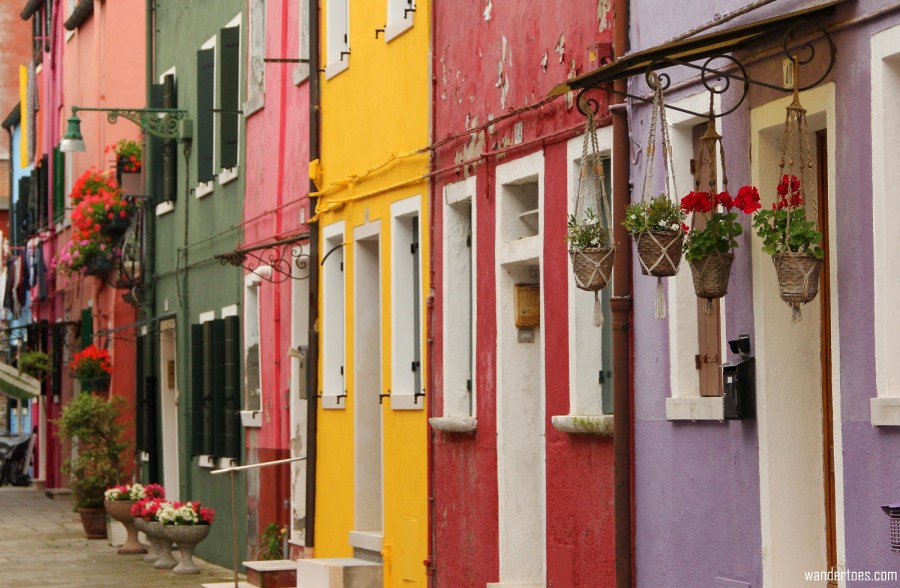
2. Burano’s Brightly Colored Homes
The island is covered in brightly colored houses, a tradition that dates back to the height of Burano’s fame and wealth. It is believed that the resident fisherman began painting their homes in bright colors so that their houses would still be easily identifiable, even when returning from the day at sea in the fog. Today, the colorful painting is maintained by Burano regulation, with the homes in different areas following strictly regulated color patterns. If you wish to change the color of your house, you must submit a request to the government, and you will be told what colors are approved for your area and home.


Oh, and sadly, when I looked in to purchasing a house on Burano, the overwhelming response was simply: Good Luck. And, another dream dies.


3. The Vaporetto Ride to Burano
The fact that Burano is a 40 minute ride on the vaporetto from Venice, means that day trippers are reluctant to travel to the island. Don’t let the 40 minutes dissuade you, though. During the ride, you will pass by the cemetery island of San Michele, then the glass blowing island of Murano, and Torcello, before reaching Mozzorbo, and then Burano. It is a beautiful ride in its own right.


4. Burano’s Smaller Crowds
Because many visiting Venice can’t sacrifice the time from their tight schedules to make that vaporetto ride, Burano’s crowds are significantly less than Venice. There were still times I had to patiently wait while the person who clashed with my photo meandered their way out of the shot. But it is actually possible to get photos without tons of people, which is pretty amazing.


5. Burano’s Fresh Seafood
As I mentioned earlier, fishing was a key part of Burano history. In fact, fishing was the primary trade for most of the island’s history. Times change, and there are far fewer fisherman on the island today. But, it is still quite possible to find a meal created from the daily catch, so do take a look around. One good option is Al Gatto Nero Da Ruggero at 88 Via Giudecca.


6. Burano Italy’s Lace History and Souvenirs
The gorgeous scenery, colorful homes, and fishing, isn’t all Burano has ever been known for, though. It was also the center of a thriving lace-making industry. Legend goes that a fisherman returned from fishing one day with a wedding veil for his betrothed that had been given to him by a siren. The work was so lovely, that when his betrothed was seen in it, people immediately set to work attempting to produce work as beautiful. And a lace-making industry was born.
Whether or not the origins descended from a siren, the lace industry became famous and lucrative for Burano. In fact, Leonardo Da Vinci even visited in 1481, and bought the cloth he used on the altar at the Duomo di Milano.


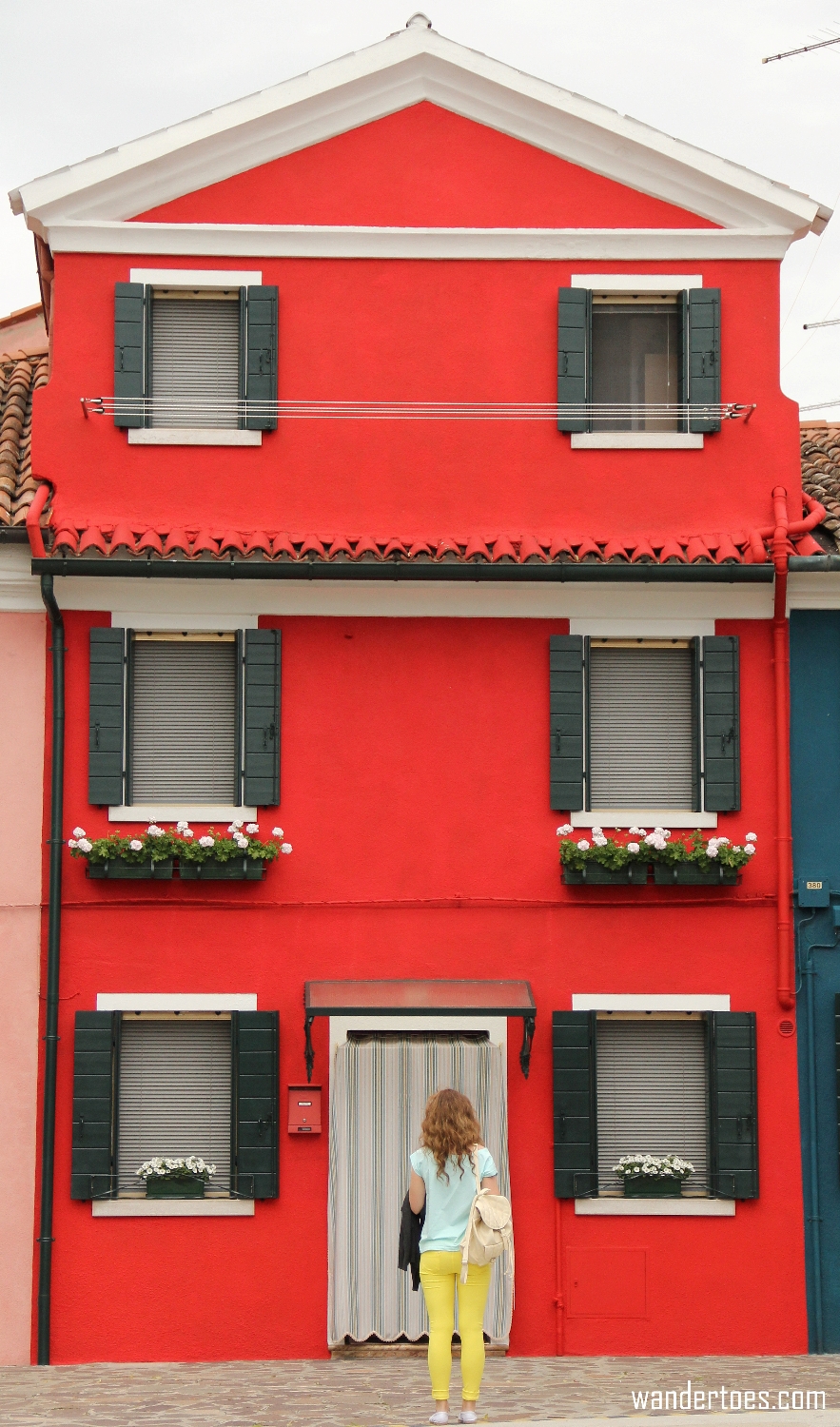
I have no idea who this lady is in the next picture, but she was so perfectly contrasting with the bright red-orange house, I just had to take her picture! (And I absolutely want those yellow pants.)

The height of popularity for Burano’s needle-created lace was during the 1600s. The lace became known as punto in aria, meaning “points in the air.” It also became a status symbol for European nobility, worn at the cuffs, in intricate stand-up collars, and used in accessories such as handkerchiefs, shawls, and gloves. Catherine de Medici even brought designers of Burano lace to France when she became Queen.
Today, lace is still sold, made by women who have learned from mothers and grandmothers for the most part. It is sold in the shops on the island and is worth looking for. But use caution! True Burano lace is time intensive and expensive, cheaper pieces sold in stores is often imported. Ask if you want the real thing.


7. Your Camera Will Love Burano
Burano was an absolute treat for my camera. I wandered the streets with absolutely no purpose other than to find more and more interesting corners and side streets. I took over 220 photos in just one half-day on the island, and that was exhibiting self-control since my dear husband was patiently reading a book and waiting for me to go have lunch with him. Get there early to take advantage of the smallest crowds and get your photos!
.
One bonus reason to visit:
The island is small enough it’s nearly impossible to get lost, so just set foot on it, and go.
.
If you need more Burano in your life, check out this post: Doors and Windows of Burano
You can also check out similar posts such as Anafiotika in Photos and Doors of Venice
.
Pin me to save for later!


